Showing posts with label understanding hair. Show all posts

Greying Hair vs Protein? When Grey Hair Gets Wiry And Unmangeable


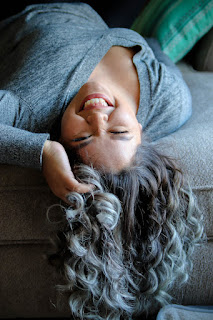
Here is a chance to learn from my mistakes. It literally took me a couple of years to learn to take care of my greying hair. Maybe I missed all the advice because I've gone grey much earlier than my peers. It kind of sneaks up on you -- at first all you have to do is decide between dyeing or not. But when grey hair hits critical mass, you might start wondering why it's acting out and not responding to whatever worked before.

My high porosity hair was always very happy with a lot of proteins: protein-rich conditioners, beer rinses, yoghurt masks. With time it wanted less of those things, I thought it was because the porosity decreased as the damaged sections grew out. But as recently my favourite high-protein Kallos masque made my hair really unmanageable, I realised that it can't just be porosity. My hair never was and never will be low porosity even when super healthy, it has a lot of texture and curls.


Anyway, I was annoyed. After some research I found out that grey hair doesn't do well with protein.

Grey hair is hollow on the inside, and it's texture can be quite coarse and wiry. There are a couple of different theories about this, one says that the process of the decrease of pigmentation is closely related to the process of hair growth, so hair may grow slightly deformed. Other theories say that grey hair has a thinner cuticle and so it is very susceptible to damage and dehydration. Also the ageing scalp produces less oils.

Whatever the reason, the fact is that grey hair can be coarse and unruly. And proteins can make this worse.
Note: grey hair dyed to another colour is still grey for hair care purposes, as only the colour changed, not the hair structure.

When looking for products for greying hair that is wiry, coarse and matte, find something with more emollients and humectants and with less or no proteins. It's pretty easy to find  proteins in ingredient lists. Personally I have moved on to very light conditioners plus flaxseed gel, and my hair is behaving again. Another important thing I did was minimise sun exposure, which is really damaging for grey hair.
 
 
If you've been wondering where I have been, I have been very busy with schooling. I'm writing my thesis, getting practical experience, and sitting in on experienced people in the field. If all goes well, I'll have my dream job later this year. So I'm still here, just busy with life. I do post on my instagram from time to time. 


How To Treat Very Porous Hair And Damaged Hair: The Complete Guide


I have talked about how to determine your hair's porousity in this post.

   Highly porous hair is compliant and yielding as opposed to low-porous hair which is resistant.
Porous hair yields to all kinds of hairdresser treatments like perms, straightening. It gets wet easily and dries easily, it reacts strongly to the weather (heat, humidity, wind). It looses its shape easily and get squashed out of shape by elastics, hats, sleeping on it.

* Porous hair is easy to dye, but the colours gets washed out quicker.
* Porous hair usually loves proteins.
* Is easy to damage and break, so be gentle!
* Dries out very easily.
* All damaged hair is highly porous, but not vice-versa.
* Tangles a lot.
* Gets dry when the air is dry, and gets frizzy when it rains.
* Looks very bad when not cared for properly.

Here is how to take care of porous hair and decrease its porousity:

Washing:

   Wash the hair gently. Avoid SLS, SLES, ALS, and ALES as they create even more gaps in the cuticle, and don't even think of washing your hair with baking soda.

Moisturising:

   It is very important to moisturise porous hair, as it tends to be dry. Look for moisturising ingredients like d-panthenol, propylene glycol, urea, hyaluronic acid, lactic acid, sodium lactate
sodium hialuronate, aloe vera. Ideally, keep the conditioner on the hair for a longer time. Use hair masques often, and even overnight. The open scales don't hold moisture, so to seal the moisture in, you should use oils and proteins to "stop" the gaps between the scales.

Proteins:

    Most porous hair loves protein. I have written quite a bit on proteins here. Especially milk protein, silk protein and keratin work well for porous hair.

Oiling:

   Porous hair loves oil, because the oils prevent the moisture escaping out of the open scales. It is tricky to find the right oil which will not get completely soaked up by porous hair but will also lightly coat it, but not weigh it down. Here is a basic guide to using oil on the hair. Wet oiling works very well: mixing oil with water rather than applying just oil.
Porous hair usually likes:
Polyunstaturated oils (containing Omega 3 and Omega 6 fatty acids).  Flaxseed oil, evening primrose oil, wild rose oil, wheat germ oil, borage oil, hemp oil, grape seed oil, walnut oil, blackcurrant seed oil.
Monosaturated oils: (containing Omega 9), for example macadamia nut oil, sweet almond oil, olive oil, peanut oil, sesame oil, argan oil, grape seed oil.
Oils that usually don't work are coconut oil, shea butter, cocoa butter, palm oil and babassu oil.
   However, oils is a very individual thing and you might want to try many very different kinds before you find your own "Holy grail". You can check the properties of oils online (Wikipedia or other websites).

pH level:

   A slightly acidic pH level will close the hair cuticles. Try a last rinse that is slightly acidic, for example water with a little bit of cider vinegar. Avoid anything too basic -- for example shampoos with sulfates.

Temperature: 

   Avoid heat, especially the dry kind. Porous hair releases moisture so easily that a curling iron, straightener, blow dryer can dry it up very much and susceptible to split ends and breaking. If you must blow dry, use a not-to-hot setting and stop before the hair is completely dry.
  Cold water makes the scales close. Try rinsing your hair with very cold water at the end. This is best done with your head hanging down, rinse from ears down and you will not feel the cold. Hand-held showerheads are best for this.

Styling:

   Porous hair is easy to style. Just remember that it is fragile, and be gentle. Avoid straightening and blow-drying with hot hair. Straightening can mask the hair damage and makes it temporarily look better, but it is one of the most damaging things you can do to porous hair. Avoid chemical dyeing and other destructive salon treatments.

Henna:

  Henna decreases hair porousity and makes hair shine. If you don't want to change your hair colour, try henna-based hair colour in a shade close to your own, or the colourless Cassia.

Avoid mechanical damage:

    Handle the hair as if it were very fragile. Towel dry very gently with a microfibre towel or an oild T-shirt. Don't use hair clips that pull the hair or elastic with metal parts. Be very gentle when combing and use the right comb or brush. Coat your hair with oil before swimming --- this will prevent it absorbing so much water that it breaks from  the sheer weight. More ways to minimise mechanical damage are described here.


  If your hair is porous and in a bad state, it will take time, even some months, before you see the effects of a gentle and caring regimen. But it is totally worth it! With some care and a good routine, porous hair can be strong, shiny and beautiful.


   Is your hair highly porous? If so, what is your best tip? Alternatively, what doesn't work for your hair at all?


Protein For Hair: Who, What and How.


   Protein is a great ingredient in hair care that is often misunderstood. Not all hair types benefit from protein. Also, protein works best if not used too often. Here are some tips that will help you find out what your hair needs:

Some hair loves protein, some hates it.
   You will probably benefit from protein if your hair is fine and / or porous. Protein works like little building blocks that fill the empty gaps in the hair shaft, leaving the hair smoother. Non-porous hair hates protein, unless it is fine (the hair). Here how you can test whether your hair needs protein or not.

Protein can leave the hair dry and crunchy.
   Unless followed by a moisture treatment. I like to add honey to my protein masque to moisturise.

If your hair hates protein...
   Just avoid it like hell. These are the names protein hides under in ingredient lists. Check your shampoo, conditioner and all styling products.

It´s easy to over-do protein.
   If every product you use contains protein, doing a protein masque on top of that will make things worse instead of better. Used in moderation, protein will fill the gaps in the hair shaft and add body; too much will weigh the hair down. Personally I use a protein treatment twice a month, more often than that makes my hair go crazy.

Protein takes at least 10 mins to work its way into the hair. 
   This means that protein in shampoos won´t get a chance to work. Try protein-rich conditioner, leave-ins, stylers and masques.


    When in doubt, try out a simple protein treatment and see how your hair reacts. You can easily whip one up at home with yoghurt or avocado, or buy a conditioning product that contains protein (I like Kallos Latte).

    Does your hair like protein? Do you prefer home-made protein treatments or do you have a favourite product?

Photo by Gift Habeshaw on Unsplash


How To Determine Your Hair's Porousity, And Why It Is Important


    Porous or non-porous hair ? This will help you understand you hair´s behaviour and what kind of treatments it will best respond to.


What is hair porousity? It is a way to describe how the hair scales life. If the hair scales lie flat then the hair is low porousity. If they scales stand away, the hair is porous.


Highly porous hair

    Porous hair means hair that has gaps and holes in its shaft --- either dues to genetics, or damage. It easily absorbs a lot of water (this leads to frizz and breakage), and easily looses even more water (this leads to dryness). This kind of hair usually likes protein. Emollients (like natural oils) and slightly acidic rinses seal the scales shut.

Non-porous hair

     Non-porous hair has very tightly-bound scales, with no gaps. This kind of hair doesn´t like protein, since protein weights it down and makes it feel like straw. If non-porous hair gets dry, it´s hard to get the moisture in --- usually some heat is required to get the scales to open (think warm oil or shower cap)


Hair Porosity Tests: 


   The most reliable way to test porousity is under a microscope, if you have access to one. If not, there are a couple of tests that can help you determine your hairs porousity. The hair on different parts of the head often has different porosity. Test hair from the front hairline, in front of ears, and near the crown:


The finger test:

   Run a single hair between thumb and ring finger (this finger is more sensitive than the index finger). If the hair feels uneven, knobbly and bumpy then it´s porous. Non-porous hair feels smooth.

Reverse finger test:

   Hold a hair end firmly. With the other hand, run fingers from end to scalp. When the hair ruffles, and its is difficult to slide the fingers, then the hair is porous.

The water test:

    Put a strand of hair in a bowl of water. The sooner it sinks, the more porous it is. Very porous hair sinks in under a minute. Non-porous hair will float. Update: this method is ureliable, since hair is usually coated with natural oils and other stuff that might make it float (or sink).

The theories method:

    There are certain theories about which types of hair are more porous than others. 
Chances that your hair is non-porous if:


* It´s very shiny
* It repels water
* It is straight
* Is difficult to perm or colour.

Chances that your hair is porous if:
* It is curly
* It's always dry
* Holds styles well
* It gets frizzy and soaks water fast
* It is damaged
* It is often blow-dried, hot-curled, straightened, permed, bleached, dyed chemically, etc.
* It is easy to dye, but the colous gets washed out quicker.

Medium porosity is the best, of course. Knowing how porous your hair is makes it easier to pick the right care regimen and products that work with your hair and not against it.

   Coming up: what to do about very porous hair


Simple hair diagnosis: lack of moisture or protein ?


   To determine whether your hair needs protein, moisture, or both (or none), try this simple test:


Get a wet hair. Pull on it steadily. (Wrap both ends around the index fingers of both hands to make sure it doesn't slip off)

* If the hair stretches, but shrinks when you let go: your hair has enough protein
* If the hair stretches a lot, and does not shrink back, it lacks protein.
* If it breaks, it needs moisture.
* If it seems to stretch and break, then try both protein and moisture treatments.


An alternative way to diagnose your hair's needs: >click<


Read more about protein and moisture treatments, how they work and how to use them >here<


Photo by denis collette


Got Dandruff ?


    The first thing you need to do is go *here* to find out whether what you have is dandruff or a dry scalp. Dandruff grows only on oily skin, so there isn't such a thing as dry dandruff.

CAUSES OF DANDRUFF

Treating your dandruff from within:

   Ayurveda and homeopathy tells us that skin problems are not diseases, they are symptoms. Skin is the biggest eliminating organ in the body. I personally support this view, because I clearly observe the way my skin reacts to sickness, food and lifestyle changes.
Dandruff is a signal that there is an imbalance in your body.


* Hormonal imbalance

This may also cause dandruff. If you suspect that you have this condition, contact your doctor.

* Diet: Clean up your diet to clean up your scalp.

Malnutrition is a big cause of diet. Malnutrition doesn't necessarily mean starving because you can't afford food: it means putting junk into your body.
How are you eating right now that could be causing dandruff by creating a disbalance in your body? 
 * Do you eat a lot of fried food, heavy oils or too much animal protein ? -- Dandruff is built of protein and fat. 
 * A lot of processed food ? Unhealthy sweets ? (Only sweets with refined sugar, chemicals and other crap are unhealthy. For fantastic recipes of healthy sweets go *here*) Our body works very hard to get rid of stuff that is not good for it, and the appearance of our skin suffers as the result. 
Try to eliminate the processed stuff. Replace white flour with dark whole-grain flour. Eat organic when you can. Throw out the sugar, aspartam and other artificial sweeteners, and try out Stevia: the natural 0 calorie sweetener; or Agave nectar. Making 50% of your food raw works wonders for dandruff, and for the rest of your body too !

* Food allergies

Very often dandruff is caused by our body being allergic to some kind of food. The most common cause in milk and wheat. To find out if you're sensitive try eliminating that food from your diet for a while and see if the dandruff goes away.

* Zinc 

Dandruff is a fungus that thrives on an oily scalp. An oily scalp is often caused by zinc deficiency. Try eating foods rich in zinc to lower the oiliness of your scalp.
  • Fruit & Veggies: avocado, olives, squash, sweet potatoes, cauliflower, onion, artichoke, lettuce, tomatoes, cucumber, spinach, radish and peas; blackberries, kiwi fruit, strawberries, bananas and peaches.
  • Nuts & Seeds: All nuts and seeds have zinc, but the ones with most are pumpkin seeds, sunflower seeds, cashew, pine nuts, brazil nuts, almonds and walnuts. ♥  Tip: to gain the maximum nutritional value and digestibility soaking your nuts (lol) before eating them.
  • Pulses: Lima beans, soya beans & their products, chickpeas, kidney beans and even baked beans.
  • Supplements: If you eat a healthy diet which includes some zinc-rich food, supplementing is unnecessary. However if you do chose to take zinc pills, take them at least on hour before or after a meal, because food interferes with zinc absorbtion from pills. Also, most zinc tablets are not meant to be taken every day, so do read the instructions and ask your doctor before tinkering with your body ! (yes, i told you that eating healthy is easier than popping supplements.

* Magnesium 

Magnesium deficiency is also a common cause of dandruff. Megnesium rich foods include cocoa, nuts, beans, tofu, pumpkin and squash seeds
You can take a magnesium sulfate supplement 25-50 mg, 3-4 times a week. Discontinue after a few weeks, when the dandruff is reduced. 

* Evening primerose oil

Evening Primrose oil is rich in Gamma-Linolenic Acid (Omega 6), and it helps with skin problems. Try taking internally about 250 mg per day for 3 days a week.

* Selenium and Vitamin C

Both of these are antifungal, so be sure to include them in your diet ! Brazil nuts have a loooot of selenium, so much that you need to eat them only once in a while. Vit C is found in a lot of fruits and veggies, however it is very easily destroyed by cooking. So, be sure to include some raw stuff in your food !


* Blocked circulation

Ayurveda states that dandruff might be caused by sluggish blood flow in the scalp area. To give your circulation a boost, try massaging your scalp. *more on scalp massage*


TRIGGERS OF DANDRUFF: 

Eliminate external aggravations

    
Though the cause of dandruff lies within the body, these factors trigger it and further aggravate it:

* SLS

This little chemical demon lives in shampoo bottles. It's an irritant, and along with giving you that squeaky clean feel and the nice lather, it makes your skin angry. 
♥ Look on the label before buying shampoos, choose one that is SLS free. *more*

* Harsh Shampoos

A lot of normal or anti-dandruff shampoos contain too many harsh chemicals. Anti-dandruff shampoos often aggressively clean your scalp instead of curing the problem. 
♥ Try going for gentle shampoos, try out natural products, or give up shampoo altogether and clean your hair with conditioner.

* Hair dyes

The chemicals in hair dyes often aggravate sensitive scalps. 
♥ Try switching to Henna for a few months, and watch how your scalp react.

* Styling products


Harsh chemical ingredients in conditioners and styling products may also aggravate dandruff. 
♥ Stop using them or find milder alternatives, and observe the reaction of your scalp.


* Stress


Often you can tell whether someone is going through a rough patch because their dandruff gets worse. 
♥ After you identify the causes (not just triggers -- yes, there is a difference) the stress, there are 3 main ways to deal with it:
♥ Find ways to do it better: research online for ways to do stuff more efficiently (like getting things done, more efficient software, 
♥ Get away from it, physically or mentally: end the draining relationship, get a job that you actually like, or simply find an hour every day to do what gives you pleasure.
♥ If it is something within you that is causing the stress, try EFT. It really works ! Learn about controlling your anger or jealousy, try exercise to let out pent-up energy, try Tai Chi or Yoga...


Coming up: natural DIY treatments for dandruff.
So stay tuned !


Dry scalp masquerading as dandruff


In this post I talked about how what may look like dandruff may just be a very dry scalp.

How to treat a dry scalp:


Basically there are two things you have to do: stimulate the oil glands, and use gentle hair products.

How to stimulate the oil glands:


♥ Wash your hair with cool or cold water. Very warm of hot water strips the scalp of its oil, while cold water stimulates the oil glands. Read more

♥ For the same reason, use the hair dryer sparingly, and never on the hottest setting.

♥ Massage your scalp, you can use a bit of oil on your fingertips.

♥ Brush your scalp, this stimulates the oil glads, and loosens the flakes.

♥ Go upside-down for a few minutes every day. We spend a huge of our life upright, and our head is the last place the blood goes to.

Use the right products:


♥ Use a gentle shampoo for dry hair. Remember, you should match the shampoo to the scalp type (and the conditioner to the hair type.)

♥ Avoid shampoo with SLS and sodium. Both aggravate dry scalp.

♥ Do not use an anti-dandruff shampoo ! These are usually quite harsh, and will irritate a dry scalp.

♥ You can try using your conditioner as shampoo. This is really helpful to balance out all kinds of scalp problems. Read about it here.

♥ Try an oil treatment for your scalp. You can either do a deep conditioning treatment, or else massage a tiny bit of oil on your scalp either before bed (so that it has all night to sink in) or after a shampoo when you hair is still wet: this seals in the moisture, and prevent the scalp from drying out further. Read more on using oils and different kinds of oils.

   Hair washing for the dry scalp:

Massage a nice heavy oil half an hour before washing your hair. Brush your scalp to loosen the flakes. Wash hair with cool water, gently massaging the scalp. be sure to rinse the shampoo out of your hair really well. After towel drying, massage a tiny amount of a light hair oil into your scalp. Let your hair air dry.

Photo: Mechanical tide by kimrose 


Is it dandruff or is it something else ?


   Rebecca from The Space Between My Peers recently asked me about dandruff. So, I presenting a  series of post on this pesky hair problem !

    So, you have dandruff. Are you sure ?

What we often think is dandruff, can be:
  1. Dry scalp: the skin on the scalp is so dry that it flakes. *solutions here*
  2. Scratched-off sebum: sometimes our scalp gets oily, we start scratching off the sebum. This leads to bits of sebum in our hair, which looks like dandruff but isn't. The giveaway is that you don see flakes, just small rolls of sebum. This means that your scalp is too oily.
  3. Real dandruff: big flaky pieces of skin. You can also feel a waxy buildup on your scalp. Dandruff flakes are always oily. If they aren't read the first point again.
   In the next few days, I will discuss each of these problems and the solutions in detail !

                 Till then !

Photo by Matteo Foiadelli    


Oily scalp & dry hair, and other "combination hair" problems


 It's quite typical that our scalp and our hair have different problems from each other. Many people have an oily scalp and dry hair, or maybe dandruff on the scalp and oily hair. Here are some tips on how to deal with that:

  • Match your shampoo to your scalp type, and your conditioner to your hair type.

Yes, I don't believe in the 2-in-1 conditioning shampoos. The role of the shampoo and the conditioner are entirely different: the shampoo is suppose to dissolve dirt, and remove the coating of styling products. The role of the conditioner is to coat the hair with a nourishing substance, which should penetrate the hair and also cover it. So, as you can see that it's better to use separate shampoo and conditioner.

  • Use shampoo on your scalp, and conditioner on your ends.

It's our scalps that are greasy, dirty and dandruffy, and need the shampoo. For the rest of the hair, it's usually enough when the shampoo water flows over the rest of the hair when you rinse out your scalp.
The conditioner goes on the length of your hair, do not use it near the roots or you'll end up with limp hair and greasy scalp.

  • Brush out your hair

Twice a week, take time to brush your hair from scalp till roots many times (don't forget to first detangle it gently with your fingers or a wide-toothed comb). That massages the scalp and distributes the oil from the roots to the length of the hair. Over time, it will diminish the disbalance between an oily scalp and dry hair.
Use a good brush, and be gentle !

Photo by spinal faun    


Check these out: