Showing posts with label hair care. Show all posts

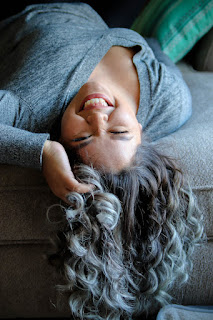
Greying Hair vs Protein? When Grey Hair Gets Wiry And Unmangeable


Here is a chance to learn from my mistakes. It literally took me a couple of years to learn to take care of my greying hair. Maybe I missed all the advice because I've gone grey much earlier than my peers. It kind of sneaks up on you -- at first all you have to do is decide between dyeing or not. But when grey hair hits critical mass, you might start wondering why it's acting out and not responding to whatever worked before.

My high porosity hair was always very happy with a lot of proteins: protein-rich conditioners, beer rinses, yoghurt masks. With time it wanted less of those things, I thought it was because the porosity decreased as the damaged sections grew out. But as recently my favourite high-protein Kallos masque made my hair really unmanageable, I realised that it can't just be porosity. My hair never was and never will be low porosity even when super healthy, it has a lot of texture and curls.


Anyway, I was annoyed. After some research I found out that grey hair doesn't do well with protein.

Grey hair is hollow on the inside, and it's texture can be quite coarse and wiry. There are a couple of different theories about this, one says that the process of the decrease of pigmentation is closely related to the process of hair growth, so hair may grow slightly deformed. Other theories say that grey hair has a thinner cuticle and so it is very susceptible to damage and dehydration. Also the ageing scalp produces less oils.

Whatever the reason, the fact is that grey hair can be coarse and unruly. And proteins can make this worse.
Note: grey hair dyed to another colour is still grey for hair care purposes, as only the colour changed, not the hair structure.

When looking for products for greying hair that is wiry, coarse and matte, find something with more emollients and humectants and with less or no proteins. It's pretty easy to find  proteins in ingredient lists. Personally I have moved on to very light conditioners plus flaxseed gel, and my hair is behaving again. Another important thing I did was minimise sun exposure, which is really damaging for grey hair.
 
 
If you've been wondering where I have been, I have been very busy with schooling. I'm writing my thesis, getting practical experience, and sitting in on experienced people in the field. If all goes well, I'll have my dream job later this year. So I'm still here, just busy with life. I do post on my instagram from time to time. 


How To Protect Your Hair From The Sun


I already posted about me frying my hair last summer due to bicycling around town without a hat. Hair, especially greying hair, is highly susceptible to UV damage. Note that I live in a relatively cold climate and we don't even get that much sun.

This winter I was diagnosed with eczema and after a couple of different treatments the one that was most effective was UV light on the scalp. After a while I noticed damage -- my hair was dry and coarse. 

If you have greying hair (doesn't matter if you dye it), your hair is bleached or damaged, or if you live anywhere with a lot of sun, or spend a lot of time outdoors, this post is for you. 

Do hair products with SPF work? 

The answer is -- not well enough. It's pretty much impossible to coat every single strand of hair, and if you somehow did manage to, you'd look like you dipped it in an oil slick. 
So if you want you can use it as an additional help, but you really need to rely on physical protection.
 
What does help a bit is oil -- I have seen as well tested how hair reacts to the sun with vs without a coating of oil, and can really recommend it.
So we are back to using traditional ways.

Hats:

I love hats, and I believe that there is one out there for every person. My go-to place is TKMaxx, I find the best ones there every summer, often made out of UV-reflecting fabric. Another go-to place is Bijour Brigitte, and of course flea markets. (Yes, this does mean I lose at least one hat per summer). Here is a hack on how to make a loose-fitting hat fit better.

Scarves: 

The key here is to find a scarf that really really goes with your face or your style, otherwise it can look quite matronly. Pay attention to the fabric weight and stiffness as well to the pattern. I think you also need to experiment with many ways of tying it, to find what works for you.
 
Protective Updos 

Braids and buns protect at least the lenght and ends of the hair from the sun.
 

The total protection dork 'do

My bicycle commute hair solution is, well, rather dorky. I plop my hair with a scarf to protect my waves, and over that I put on a visor to protect my skin (imagine only the brim of a hat, without the top part). This stays on securely even if there is wind, and my waves don't get flattened. I take it off when I reach my destination, and nine times out of ten I have voluminous waves. Here is the scarf wrapping style I use:


Finally, remember that it's all about balance. I would not forgo having fun experiences because my hair might suffer, but I do try to be good about wearing a hat when possible.
alias            
Zeta


My Guide For Solid Cosmetic Products


Solid products have moved from the hardcore backpacker/environmentalist niche to being the new hot thing, so I wanted to write a little about my experience with them. 

The big plus point for solid bar products is their lower environmental impact-- low to no packaging, instead of a big plastic bottle, half of which is water that is transported halfway around the globe, you get a little bar in a cardboard box. Solid beauty products are dry and concentrated, this imo justifies the often slightly higher cost-- they usually last longer, volume-wise.

But lets talk about ingredients. Solid products usually don't need preservatives, because they are dry. Other than that, the formulations are often very different than those of conventional products. It's also important to note that a solid product is not automatically natural -- seem of them contain ingredients like SLS so make sure you check the ingredient list or look for products organic certificates.

Solid shower gel

I love these so much. While regular soaps are formulated to get heavier dirt off your hands (from cooking, cleaning, etc), solid bath gels are much gentler and usually have a neutral pH level. Unlike soap, they don't dry your skin and feel pretty much like regular shower gel when you wet them. They feel luxurious and creamy, just like shower gels. I love them so much that I don't think I'll be switching back to regular soap for my body again.

Solid body moisturisers aka lotion bars:

Lotion bars are very moisturising and you should absolutely try them if your skin is dry. They are best used after showering or while actually in the shower. Combined with heat and water they go on easily and seal in the moisture. I like to rub the block in my hands as if I were lathering soap, this makes the bar melt. Then I apply as usual. I feel like the lotion bars seal in the moisture very effectively, and in the winter I feel like they keep me warmer. This might sound weird but someone pointed out that when your lips are cold and you apply balm, they stop feeling cold. So it's kind of like that. The downside is that the application does take a couple of extra minutes, and is not so nice if your skin isn't wet. Anyway, I don't think my skin has ever been so moisturized as it has been this winter.

Solid hair soaps and shampoos

These are actually two very different products. Hair soap is soap, it has a basic pH level and honestly I haven't met any hair-care addict who was happy with it. As it raises the pH level of the hair, you need to  rinse your hair with vinegar to neutralise the pH level. This shifting pf pH levels isn't kind to the hair long-term. Hair soap also performs really badly with hard water.

Solid shampoo is formulated much closer to shampoo. There are a lot of very different formulations out there, so it might take some testing to find one your hair likes. Most of them give the hair more texture than slip, and can leave the hair a bit matte and cause build-up over time. However there are plenty of people who swear by shampoo bars, so if you feel like giving them a try, do! Pick ones without sulfates or sodium bicarbonate. Other ingredients to look out for is protein -- some hair types love it some hat it, I wrote more about that here. In the German-speaking market the


Solid hair conditioners

These are formulated with solid ingredients such as coconut oil, shea butter or stearyl alcohol, which makes them heavy. To solve this, some manufacturers add ingredients such as sulfates to make the bar lather, which is not very kind to the hair. I feel that if your hair is very dry, you can try out hair conditioners in a bar. If your hair is easily weighed down, skip this category.


Solid Deodorant

This is a very individual product -- I find that natural deodorants are so personal, what one person swears by may not work for another person at all. Personally I have had a lot of success with the solid deodorants from Lush.


Solid toothpaste

Fun! There are a couple of kinds out there -- while for travelers the little tablets are the most practical, I personally like powders a lot. There is also tooth soap, and while it tastes disgusting it has helped me with some gum issues. I don't really want to give out much advice here as this is more of a medical product than a beauty product, but I really encourage you to explore low-waste tooth care.

alias            
Zeta
 
Photo credit: VenusianGlow


How To Clip Hair Roots For Lift And Volume


Hey everyone, this post is filed under "I can't believe I haven't blogged about this yet". 

Clipping is my favourite way to get volume at the roots without using heat (my second-favourite being going to sleep with wet hair spread behind me on my pillow, which unfortunately gives me a slight cold). 


What Everyone With Greying Hair Should Know About Sunlight -- Aka How I Fried My Hair Last Summer


This was taken in June -- the beginning of summer -- but you can already see the dryness and coarseness in spite of loving conditioning.


Hey everyone, now that summer is coming I have to write about this. I made a huge mistake last summer which really damaged my hair, and I hope that this post can help some of you from repeating my mistake.

To preface this -- I have quite a bit of grey hair. I started greying when I was in my early twenties, a few whites here and there. Now there are many more, though not yet enough for a proper salt-and-pepper look (I tried, and it did not look good). If you have any greys you might know that they don't just have a different colour, they have a whole different texture. You might have noticed your first grey because they grew straight up like an antenna (I did). They are coarser and stubborn. And they are very susceptible to UV damage.

I did not know this.


Greasy Hair Even After Washing? Might Be Seborrheic Dermatitis


Since a while I have been struggling with waxy, sticky buildup on my hair, which appeared hours after shampooing. Usually a small patch at the back of my head, and sometimes the entire back of my head. I blamed my Henna, I blamed my styling products, till I found out that this waxy buildup on my hair was in fact a form of seborrheic dermatitis.

This blog post explained that a waxy, greasy scalp can be a symptom of seborrheic dermatitis. I very much agree with her that certain foods can trigger outbreaks of waxy buildup. (Especially animal protein, for like her I am milk-protein intolerant but am not very good at avoiding it). Stress, depression and sickness are other triggers.


Reader Request: How To Deal With A Smelly Scalp


If you have been struggling with a scalp that seems to smell bad even if you are cleaning it really well, this post is for you.
There are a lot of bacteria and yeast living on the scalp, which is perfectly normal. When the scalp is healthy, it has a normal sebum smell and will start getting funky only after a couple of days of not washing, or if you have been sweating and not letting the hair dry afterwards. However when your scalp smells really rank already the day after washing your hair, you might be looking at an imbalance of the fauna on your head.
If your scalp seems to have a lot of gunk aka heavy sebum build up (a little bit is fine and normal), you might be looking at a fungus.

How to treat a smelly scalp:

Apply apple cider vinegar (unpasteurised) on your scalp half an hour or more before washing your head. Start out with a 1:1 mixture of vinegar and water, if you your skin tolerates it you can try full strength next time. The least messy way to do this is using a cotton pad soaked in the vinegar, and squeeze it gently on your scalp. Or you could use a squeeze bottle. This should cut down on any yeast and bacteria. You can also wash your hair with soap nuts, which are very acidic.

After washing your hair try rinsing with a lemon juice-water mix, which has the same effect as the vinegar but smells way better. Personally I like to make a tea out of rosemary or sage (which are antibacterial and smell lovely), add a dash of lemon juice and use that as a last rinse.

If that didn't work, you need to go for the heavier guns: antifungal essential oils. My favourite is tea tree oil, it's very effective and gentle. My skin can take it undiluted (I massage it in with my fingertips), but not everyone's skin tolerates it neat. I advice you do a patch test first, and maybe start by diluting it with a carrier oil (any vegetable oil will do). Other antifungal oils like rosemary, tamanu, thymian  are also good, however these should always be diluted! Remember to buy pure essential oils, not perfume oils or anything pre-diluted.

Zinc based shampoos can be helpful against yeast and bacteria on the scalp. I don't recommend shampoos with sulfates because although they do get the scalp clean, they don't actually fix anything.

Other things to note:

Be gentle with your scalp, don't scratch. If you want to get your scalp clean of build-up and gunk, I suggest mixing sugar into your shampoo and giving your scalp a nice gentle scrub.

Until you feel like you have restored the balance of your scalp, avoid getting any kind of hair products on the scalp (dry shampoo, conditioner etc).


However if your smelly scalp problem is heavy and isn't going away, you should go to a dermatologist so that he can diagnose the issue. What we often think is simply dandruff may be   fungus, psoriasis, eczema, or seborrhoeic dermatitis or something else. Each of this is a different problem and the cures can be wildly different.


How To Wean Yourself Off Heat Styling Your Hair


I love Jeniffer Anniston, but at this stage her hair was so damaged it hurts to look at it. Now she seems to be taking better care of it, but the healthiest it's been is in the old 1997 brunette photos.

While styling healthy hair with heat once in a while doesn't do much damage, regular use -- especially hair that is already weakened  -- is the single biggest cause of damaged hair. However if you have been heat styling regularly, it's really hard to stop cold turkey because the hair looks very damaged. I often see celebrities with straightened hair where, if you look closer, you can see that the hair is in very bad shape.
Today I'll be talking about why heat is damaging and how to wean your hair off heat styling.

First, you might be thinking: but my hair looks so poufy / blah / damaged without heat styling! Well, that's because your hair is damaged, and if you keep on heat styling, you'll keep on having damaged hair. 

Weaning yourself off heat-styling and taking good care of your hair will completely transform it. Once the damaged hair has grown out and is replaced by healthy hair, you won't need to do that much with it, it will look good and it will be easy to care for. Hair that hasn't been damaged by heat doesn't need taming with heat.

Heat dries the hair out. Also most styling tools are much too hot, and cause "bubble hair":

"Bubble hair is a sign of thermal injury. Hair dryers operating at 175°C or more can cause bubble hair. The use of hair curling tongs operating at 125°C and applied to the hair for one minute can also induce bubbles in hair fiber. All hair fibers contain air-filled spaces called vacuoles. These spaces can also become filled with water when the hair is wet. Too much heat vaporizes the water in the hair fibre into steam. This vaporization of the water may force the spaces in the hair to expand, eventually turning the hair into a sponge-like structure. These damaged hairs are weak and brittle as the bubbles destroy the integrity of the fiber."


If you can't go cold turkey, first try limiting heat styling to special occasions. Or at least take a break every other day, and skip the weekends entirely. Wash your hair less often to stretch-out a straightening session, use dry shampoo to keep the hair fresh. However if you can go cold-turkey, that's the best!


Find a couple of good transitional styles. There are a million of braid and bun tutorials out there, you'll never get bored. Add accessories like headbands, barrettes, clips -- they are in right now and range from cute to sleek. Or use a scarf, turban, hat or beret or cap. 
When you do heat style, use good equipment with temperature regulation and use the lowest temperature possible. Don't ever use heat on soaking wet hair, let it dry a bit first. If heat-drying, stop when the hair is still slightly moist, to prevent over-drying. If using a flat iron, move the flat iron down each section of hair only once, and fairly rapidly.
Get a good haircut. Firstly, your ends are probably fried and split, splits can travel further up the hair shaft if you let them be. Cutting of the damage will free your hair, because the less damaged parts won't need that much taming with heat to make them look good. Secondly a good cut can make hair look ten times better.

Then you'll need to create a solid hair care routine. Damaged hair is usually high-porousity and very dry (though the scalp might be oily). At least once a week do a hair mask or oil your hair, and use a conditioner after every wash. Once in a while try a protein treatment.
Avoid all other ways of damaging your hair. Treat you hair as it were expensive old Chantilly lace. Minimise any kind of mechanical damage. Protect it from the sun.


Consider the reason why you heat style, and how you can get the same results in more hair-friendly ways. If you are after volume, washing with rye flour followed by flaxseed gel (leave it in) will give you more volume than you know what to do. If you are after smoothing or frizz control, try a few drops of oil. If your hair is naturally curly or very wavy and is often hard to manage, you might looks into the curly-girl method to help you work with your natural hair texture rather than against it. The curly-girl method is a life saver for very kinky curls, black women hair and anyone whose hair is frizzy because it's trying to be curly. If you really don't like your curly hair, look into no-heat straightening methods such as the wrapping method or using very large rollers on hair overnights. Also henna reduces the curl pattern (colourless henna, if you don't want it to dye the hair). If you want waves, there are tons of heatless ways to do that too, my favourite on is to do a twist-bun on the top of my head -- instant beach waves.
Patience. The first 2-6 weeks are the hardest, after that you will start seeing results. Stick to your routine. In a couple of months everyone will be seeing your results, and in a year or two your hair will be completely transformed. 

Finally, I suggest looking though the hair transformation stories on Anwen's blog. You can use google translate, but I think that the photos speak for themselves. Most of the girl went from chemically damaged and heat damaged hair to beautiful healthy locks through a good hair-care routine.


Photo credit

Rye Flour Hair Wash Update + Tips


Rye Flour Hair Wash Update


Since two months I am washing my hair mostly with rye flour. I've stopped using conditioner and use oil only at the ends. My hair looks great, stays fresh longer than ever. Also the rye doesn't wash out henna like shampoo does (it is the same with hair dye). Another side-effect I have noticed is that I am losing much less hair than before, and I'm talking like 90% less.

I started my hair care journey with very dry and damaged hair. In the beginning my hair was thankful for every bit of nourishment it got, and ate up all the hair conditioner, treatments and oil that I would throw at it. Gradually I switched to conditioner-only washing. As my hair stopped being very porous and dry (the porousity was mainly due to damage) I found that conditioner-only was often too much for my hair, it would look amazing on the first day, and limp and greasy on the second and third. When I used shampoo it felt light and bouncy but then I would get flyaways and frizz. I finally found the perfect balance between cleansing and consitioning with rye flour.

Rye flour hair wash isn't perfect. It takes a bit of pre-planning because it's best to soak it, and even after careful sieving it leaves flakes in my hair that I have to shake out. I haven't been able to get my hands on the finely-ground and non-whole-wheat version of rye flour yet, which I hope will not leave flakes at all. What does cut down on the flakes is an acidic rinse -- apparently it is the hardness of the water makes the flakes stick to the hair. I use diluted apple cider vinegar.
In the end my hair looks great and is healthy, so I'm saving time and effort and money on hair care as a whole. Finally... I stumbled onto this post about water-only washing, and it was the first one on the topic that actually made me really consider trying it in the future.

Another very important thing about cleansing with rye flour -- you need to really use your fingers to get your scalp clean. I actually count in my head to make sure I am actually rubbing my scalp for at least a full minute. A nice side effect of this is that scalp massages help with blood circulation and stimulate hair growth, it also regulates the sebum production and stimulates growth.

If your hair is really oily you can try adding a little bit of lemon juice A drop or two of tea tree oil will also keep the hair fresh longer. For hair that is very dry you can add two teaspoons of honey or half a teaspoon of oil into the mixture.

I have been recently experimenting in is mixing my rye flour with herbal infusions. You basically make a tea out of a herb that you like, and let it cool before you mix it with the rye flour. Salvia and rosemary is great for oily hair, chamomile brightens blond hair. Coffee, nettles help with hair loss. For neurodermitis or an irritated scalp, use black tea (let is brew for at least 15 minutes). If you want a nice smell, you can of course add a drop or two of essential oil, or use a fragrant oil for the hair ends.


Let me know if you have any questions, as I want to do an update about my general hair routine soon.


My Favourite Resource For Simple And Easy Hairstyle Tutorials


IMAGE TITLE


I'm pretty bad at doing my hair. I can't seem to coordinate the movements of my hands and their reflection in the mirror, and even if I do manage to follow the instructions the hairstyle usually doesn't stay in place. Still, I have been trying to expand my repertoire a bit. It's not easy finding good tutorials. American ones start by layering tons of products and then torturing the hair with heat, neither of which goes with my hair care philosophy. Also I don't own almost any styling products or tools, mainly because my bathroom is small and I just don't have the space. Lots of tutorials don't really explain how to do the in-between steps, others are just too complicated.

I don't remember how it happened that I stumbled onto this Japanese site, but I was pretty fascinated by their stuff, especially by their hair tutorials. Their home organisation stuff is pretty great too, but the hairstyle tutorials were unlike anything I had found on the Internet. Most of these hairstyles are really easy to do, plus they don't need special tools or products. Each post has variations on a theme -- low messy bun, half up, braid, short bob, etc.

The MP4s are short and to the point, there is no rambling that annoys me so much on Youtube. You can right-click the videos to slow them down or download them and save them on your phone. Here are a couple that I like:

This one is really simple to do yet looks sophisticated.


One nice technique I learnt is pulling gently at the hair strands to get that lovely texture. You can see that on the video above. That small touch completely transforms the simple hairstyle.


 This is one of the many stylish low bun tutorials from the site. Such low buns are perfect to wear with caps and hats.


 A lovely variation on the braid.


I don't speak a lick of Japanese, and though you could use Google translate to read the rest of the text on the page I find that the tutorials speak for themselves. I have successfully tried out many of the hairstyles show on Locari. I find that the causal messy-chic aesthetic works really well even if you are not terribly good with hair.

Are you good at hairstyles? If so, where did you learn? Or is this just something you have to be born with?


Non-smelly Alternative To Vinegar For Restoring The Hair's Acid Mantle


Non-smelly Alternative To Vinegar For Acidifying Hair


This post should be tagged "duh". For a long time I wished for something that would be as acidic as apple cider vinegar but without the smell. I use diluted cider vinegar as the last rinse or to clarify the hair. The water in my town is pretty hard and an acidic last rinse is the key to smooth shiny hair. Anyway, it does take some time for the vinegar smell to dissipate, so I avoid using it before going out.
So as I was cleaning my kitchen I suddenly realised that I could easily substitute vinegar with soap nuts! They are just as acidic, and my hair loves them. They have a neutral smell. The only downside is the extra preparation time: you need to cover a couple of nuts with hot water and by the time the water cools down it's ready. You can reuse the nuts a couple of times.

Of course soap nuts are not exactly the same as vinegar, for one they do not contain living bacteria cultures. Both work well for my hair but yours may prefer one or another. Soap nuts are more cleansing and can be used on their own to wash the hair.

PS I have read that we shouldn't use soap nuts because the people in India can't afford them any more -- I have almost never seen anyone in India actually using them for their hair or their laundry, apart from a small alternative community (who actually learned about them from an organic store in Germany). Soap nuts are often an ingredient in hair care products though.

Do you use soap nuts or cider vinegar for your hair?


My Best Cold Weather Skin And Hair Care Tips


via Mitya Ku

Central Europe has very distinct four seasons so every few months I have to reassess my entire skin care routine. My skin and hair react to the cold season by getting dryer and rougher. There is often some summer damage that I have to take care of as well.
Chances are your autumn looks very different from my dry and cold one. It really helps to know what kind of humidity you are working with. You can find the levels of outdoor humidity online; for the humidity levels at home and in your work place it's worth investing in a hygrometer. 50% is "average" and is supposed to be ideal for indoors. Lower than that means the air is dry and you should get a humidifier to counteract that. The skin usually likes higher humidity, but that makes the hair frizzy.

Here is how to keep your skin and hair looking great throughout autumn and winter:

* Include oils rich in Omega-3 in your diet, and drink lots of water. Both will help against dry skin and lips.

* Physical activity is really important during the cold season. In the summer we spend time more time outdoors, walk and bike more. In winter I stay inside too much and I find that this affects my skin, hair and mood. Make a concrete plan -- sign up for classes, get a gym membership or try cold-weather bike gear.

* Drink warm (or at least room temperature) water. Both TCM and Ayurveda strongly recommend this. It tastes a bit weird at first but I got used to it pretty quickly. I drink much more water in the winter if it isn't cold.

 * Go to a sauna. In Germany a lot of people do it pretty regularly in the cold season and even doctors remind me to do it. Apart from all the other health benefits, it gives you the most amazing clean and glowy skin. I always notice when a friend has been to the sauna because of that rosy clean skin! 

* Autumn is a great time to start exfoliating with hydroxy acids to get rid of discolourations and fine lines. While the sun is still strong I'd suggest the gentle mandaleic acid, and a stronger AHA during the winter.

* Skin often gets more irritable when temperatures drop. Avoid irritating ingredients like alcohols and sulfates (especially in cleansers). If you are doing chemical exfoliants, be extra gentle with the rest of your routine.

* My skin flakes during the winter, I have found that konjac sponges and microfibre cloths are the best way to gently remove these flakes.

* The burning UVB rays are very weak in the winter, but you still want to be protecting your skin from UVA rays to slow down ageing, so be sure to pick up a sunscreen with UVA protection.

* I like to refresh my style in the autumn: I always get a haircut in September and I bleach my teeth at home. This time I also got my eyebrows done, for the first time ever.

* Self-tanner keeps my skin looking summery for a while longer.

* I like rediscovering my cold-season make-up -- this is usually berry colours and liner. I feel that the heavy knits, rich colours and scarves and hats let me carry off stronger colours.

* Swap your moisturiser for a richer one. Or add a few drops of oil (I like argan, rose hip, or jojoba oils for the face). At thicker products protects the skin from the cold when you go out.

* Hair gets a lot of mechanical damage in the cold season from all the scarves, zippers, caps and velcro. Natural fabric are kinder to the hair than made-made ones. Wearing your hair up when outdoors really helps minimise damage. If you don't want to do that at least lift it up carefully when putting on your outdoor clothing.

* Get a good, nourishing body butter (I love the ones from Alverde). Or a rich body oil, you can add something warming like sesame or cinnamon oil to a body oil that you already have. In the colder half of the year I swear by the Abhyanga method.

* Give your heels some care. My feet usually look terrible at the end of summer, and I need to soak them, exfoliate with hydroxy acids (more on this soon) and then do some heavy moisturising.


Finally, the most important thing for me is to stay on top of my skin and hair care. To start with richer products ahead of time. Not to wait before my skin and hair are dry and damaged.

How much do you switch up your skin and hair routine for the cold season?


Two Hair Care Secrets From Women With Amazing Hair


Bengali Actress Bipasha Basu's hair is magical. I swear she has enough locks for two regular humans, and it always looks amazing.

  Today I want to talk about was the fabulous hair of Bengali women. In my time in India I have seen just about everything from sparse and lanky to untameable frizzy curls. However the hair of the women from the Bengal province is a whole other story. Bengalis consistently have the most amazing hair. It ranges from brown to blue-black, from perfectly straight to curly, but is almost always strong and shiny. You could always spot Bengali girls in a crowd through their hair and beautiful cat eyes.
   There is two things that Bengalis do that I think makes their hair so healthy. Traditionally they shower "from the head down" every single day. This means they wash the hair with water each day. Bengali girls told me that they didn't use shampoo each time, only every couple of days. The hair is left to dry naturally, in India going out with wet hair is acceptable and is extremely pleasant.
   I think that water-only washing every day kept the hair clean and fresh, cutting down on the need to shampoo too often. This makes a difference especially if you are using a shampoo with sulphates.


If you haven't watched Konkana Sensharma in Mr and Mrs Iyer, you should do it right now. A beautifully wistful and non-cheesy love story.

Another think that Bengalis do differently from the rest of Indians is that they consume a lot of seafood. While the rest of India leans vegetarian, Bengali cuisine has always been centred around the sea and the river deltas and so fish is a big part of their food. Now, you probably know that Omega-3 fats are great for the hair, I have been raving about flax seed on this blog. However there are several kinds of Omega-3 fats: ALA, EPA and DHA. Seafood and seaweed are just about the only sources of EPA and DHA Omega-3 fatty acids. The deficiency of these two causes dandruff and hair thinning. Here is a very interesting post breaking down our daily need for the different types of Omega-3, it talks about how the body can convert the ALA into EPA and DHA. I have also read that seafood and seaweed being the secret of the healthy hair of east Asians.
I personally don't eat fish for environmental and ethical reasons; moreover I have read that the levels of mercury in fish are going through the roof but the "safe amounts" are kept high so as not to kill the fish trade. I do include seaweed in my diet, and have been thinking to occasionally supplement with spirulina. My favourite are the dried seaweed sheets (nori), they are crispy and fun to eat. I sometimes sprinkle them into salads.
Pollution in the sea can affect how healthy seaweed is, so it makes sense to check where your seaweed comes from.


Kajol made the unibrow sexy

Another thing that is not really specific to Bengalis but is a rather less known Indian hair care secret is protecting the hair from the sun. Indian women usually cover their head with a scarf or carry an umbrella as well as apply hair oil to prevent the sun from frying their hair.

Any Bengali readers here? If so, I'd love to know your perspective. Everyone else,  how does food rich in Omega-3 affect your skin and hair?


Ways To Apply A Scalp Treatment


  Most scalp treatments are liquid, like the DIY tisanes or birch water. I used to apply them with my fingers but it was messy and I had a hard time doing the back of my head. Then I remembered how a girl I knew a long time back had done it. She was applying a solution of apple cider vinegar and water to help against dandruff.
   You take a cotton pad, a small sponge, or even a small rag. You dip it into the solution and systematically apply onto the scalp, squeezing lightly. I like to do my hairline first, then part my hair inch by inch. Don't forget the back of the head and behind the ears!

  Another alternative is to transfer the product into a small spray-pump bottle. These are usually available in DIY stores, you can save bottles from used-up cosmetics. I have also spotted Dr Hauschka pump tops which fit over their bottles. It is important that the pump is just right, some shoot out an annoying jet while other shoot out a very fine mist, you want something in between.
  The third option would be a squeeze bottle, but here it is really hard to find something that will work with liquids. They work best for oils.

   How do you apply hair treatments? Do share.


Two Ways To To Apply Conditioner For Faster And Better Penetration Of The Hair Shaft


   I advocate using conditioner after every wash, and a conditioner / masque before at least once a week. Ideally the conditioner should be on the hair for 20-30 minutes. I wanted to share with you how you can make the conditioner work better for you. These two techniques allow the conditioner to penetrate the hair shaft better, which will make you hair look and feel healthier. They will also save you time, as you won't have to keep the conditioner on the hair for so long. Finally, they can help influence the hair texture a bit.
  First, spread out the conditioner evenly on towel-dried (moist, not wet) hair.Then try one of these two methods:

Scrunching

   This method is best for curly / wavy hair, as it will accentuate the curls and keep frizz at bay. Gather a section of hair with your hand from below, lift it towards your scalp. Your hair should coil into your palm. Pump and squish the hair with your hand several times, before moving onto the next section. This method is very popular among the curly-girl community.

Palm ironing

   This is great for straight hair. Imagine your palms are a flat iron. Place a section of hair close to your scalp between your palms, press your palms together and "iron" the hair down towards the roots. Do a gentle rubbing motion with your palms. If you end up with all the conditioner escaping, that means your hair was too wet to start with. You can find a more detailed explanation on Henrietta's blog.


  You should spend around 5 minutes on your method of choice. You will notice that you need to use more conditioner than usual, however you will be getting more effect out of your conditioner. You are using your hands to warm up the conditioner and mechanically help it to penetrate the hair cuticles. Your hair will end up shinier, softer and more manageable!


  If you try this out, let me know how it works for you, especially how it affects your hair texture and curl / straightness.

Photo credit: Eternalvoyageur

How To Make Your Hair Grow Faster


   Hair growth was something I have never had problems with. Until the time I followed some really bad advice and applied very hot henna on my scalp. I only realised my stupidity when my hair started coming out in handfuls a few days later. I spent the next weeks researching ways to speed up hair growth, and trying them out. It took a while, and now my hair is back to its full thickness. I know that many of you struggle with hair loss or hair that grows too slow so I wanted to share some tried-and-tested methods with you.

Causes of hair loss

   Hair loss can be caused by stress upon the body such as sickness, pharmaceuticals, ageing, hormonal problems, pregnancy and giving birth -- these factors are often not entirely under our control but it still makes sense to take a bit of extra care of the hair and scalp and try to reverse the hair loss. Other causes for losing hair are things that we can try to manage, like a bad diet (both unhealthy eating as well as drastic weight-loss diets), psychological stress or aggressive hair treatments. In these cases you need to address these causes (for example by finding methods to channel the stress) as well as using the cosmetic methods that I describe in this post.

   So, here are some tricks to stimulate hair growth. Patience and consistency is the key, and if you stick to it you will start seeing results.

Scalp treatments 

   These are products that you massage into the scalp, either after washing the hair, or an hour before (if they smell weird or have a heavy consistency). One of the most effective hair-growth method is a Fenugreek scalp treatment. To make it pour boiling water over Fenugreek seeds, let steep for 10 minutes, then let the mixture cool down. Rub in into the scalp and leave on for at least an hour. Another really effective herb for this is nettles, Birch water (Rossmann) works well too but contains alcohol and can be drying for some people.

Scalp massage 

 Stimulate the blood circulation in the scalp by gently massaging it. Use your fingertips, press, and move the skin of the scalp. 1-2 minutes twice a day would be ideal, you can do it while watching TV, or waiting for your coffee to boil.

Diet fixes 

   If your diet is full of processed food, there simply isn't enough of the good stuff left over for your hair (which from the point of view of the body is a non vital organ and is at the end of the queue). Add more vegetables and fruits into your diet. A handful of nuts and seeds everyday is something you absolutely should be eating each day, as they contain several nutrients that your veggies and fruit might be missing. A brewers yeast supplement for the B vitamins can also be really good, as well as flax seeds for the Omegas. Sea weed is also good for hair growth, so if you need an excuse to eat sushi, there you go.

Stimulating the circulation

    Positions where the head is at the level of or lower than the heart increase the blood flow in the scalp. A comfortable position for this is the Viparita Karani. It's also good for the skin, it's a restorative pose which will help you when you are feeling stressed or tired. And yes, you can totally read a book while you're laying like that.

Oils

   Rosemary oil and stinging nettle oil both stimulate hair growth when applied on the scalp, but you need to dilute them with another oil first. You can also harvest these plants first and submerge in oil for a week or two to make an infusion (the oils that would work well are extra virgin olive oil,  sunflower, flax seed or grape-seed).

Indian Herbs

  Amla, Brahmi and Bhringraj are the trio most used to stimulate hair growth and improve the condition of the hair. They are available as oil, tonics or powders. Khadi carries a nice pure Amla hair oil.

What to avoid:

    Shampoos with sulfates, harsh hair dyes, drying your heat with the dryer at the hottest setting, Overheating or freezing the scalp (protect your head with hats or caps)

    With all of these methods you have to give them at least 4-6 weeks to work. With a bit of consistency you should soon be rewarded with a crop of "baby hair".

   Do you have any tips for stimulating hair growth? Do share. Also, I'd love to know if it was a certain diet and lifestyle changes caused your hair loss (or, helped with hair growth).

Photo credit: me

How To Fight Flat Hair Roots And Get More Lift + Volume


   These days I like to think of my hair as my mane. It has tons of volume, movement, and is so very me. But it wasn't always this way, especially with the volume. I used to have hair that lay completely flat on my head and I thought that my hair would never ever be lifted at the roots. If you think so too, this story is for you. It took a few tweaks to my routine to get lift and volume on the top of my head.
   A friend was complaining about her flat hair roots, and so I showed her a photo of how mine looked for years. There you go: 


That was the situation for most of my adult life. Till I realised that root lift is something that you can get if you want to.

My roots now:

   It took a couple of tweaks in my hair care routine to get this change.

On the aesthetics of flat vs volume on scalp:

   No volume at the root often comes together with straight, smooth hair and can look very beautiful. The advantage of volume at the roots it that it makes the hair look healthier, and is flattering for most face shapes because it lengthens it. In spite of that, hair that is lifted at the roots is a learned taste and a matter of personal preference. In India root volume wasn't important, but the hair was supposed to be sleek and smooth (like this or this hair product ad, compare to an European ad, incidentally it has Leighton Meester in it, ahhh). East Asian hair can look amazing when it's straight, heavy and, yes, flat.


 How to get more root volume

   Here is what you can do to get more lift at the roots. Of course mileage will vary, and the right haircut is probably the most important of all the tips.

Sleep with your hair on top of your head

   I do my hair in a ballerina bun right on top of my head to sleep and when I hang around the house. Alternatively I just grab it in a loose messy pile and secure with a huge clip. It might feel weird at first but the hair roots get used to it fast, and you get instant volume! At first the volume hold only for a few hours, but gradually as you implement the other changes it will last for the whole day.

The right cut

  I used to have longer hair that cut straight at the ends. It gave me triangle-head, flat on top and voluminous at the bottom. Then my hair dresser gave me lovely layers which make the hair much lighter, it doesn't hang so heavily any more and is "lighter" at the roots. Even though a lot of hair gets cut away every time, it actually looks fuller because of the layers and the movement.
   You need to get a hairdresser that understands your hair type and knows how to work with it, because thick heavy hair will need a different cut than thin silky hair. You also need to explain to them that you want more volume on top, and understand that not all cuts can give you that.

Blow drying your hair for root volume

   If you blow-dry, do it while hanging your head upside down and using a diffuser attachment (you can buy this separately and attach to the dryer you already own). You could also pull the hair up on a round brush.

Clip drying for root lift 

   If air drying, use small clips to lift your hair at the roots. Here are a couple of good examples. I'm usually lazy and use three bigger duckbill clips. I haven't tried them myself, but HiClips also look promising. You can also try wearing your hair to dry in a twisted ballerina bun while waiting for it to dry.

Switch up your part

   Keep your hair on its toes and don't always wear the same part. If you wear a right part, try drying (and even styling) your hair with the left part, and then flip it to the right part at the end. Sleep with a different part.

Fighting hat hair

   Before putting on your cap or hat, flip your hair to one side (if you already wear your hair flipped or parted to one side, flip it to the other side). Put on the cap. When you remove it, flip your hair back to how you normally wear it. Your hair won't be flat at the roots!

Cleanse your hair and scalp

   Silicons often weigh the hair down, so try switching to a silicon-free hair regimen. Once in a while clarify your hair to get rid of product buildup. A scalp scrub with clean the scalp from old skin flakes.

Condition before washing

    Use richer hair conditioners, masques or oils before shampooing, leave on for at least 30 mins under a shower cap. Shampoo only the scalp. After this your hair should be conditioned but not weighed down. If your hair is really dry and still needs moisture or emollients after shampooing, use a very light conditioner (leave-ins are really light, or you can dilute a regular one with water) and apply from ears down.

Deal with your oily scalp

    Here is my post on dealing with an oily scalp. Switch to a gentler shampoo that won't aggravate the oiliness. Use simple scalp treatments. Don't wash the hair with hot water. And always rinse of the hair really well.

Go easy on the brushing

   Brushing can pull the hair flat and spoil it's structure. For curly and wavy hair often a bit of detangling with the fingers is all it takes, you can also use a wide-toothed comb. I rarely brush at all, and if I do it's usually before washing, when I want to give my scalp a nice massage and spread the oils from roots to end. My hair doesn't tangle, though it used to tangle a lot before I started taking care of it.

Henna

   Henna gave me more volume that I have ever had. I love the Henna from Khadi, it colours quite well and is easier to apply than any other I have used. If you don't want to change your hair colour, you can get a shade that is close to your own, or try the colourless Cassia. Conditioners that contain Henna also add volume, although the effect is not so dramatic.

Lifting products

   When shopping for products that promise lift and volume always pick the ones without alcohol. Dry shampoo is a life saver if your scalp is getting really greasy. I love the one from Klorane. Scalp treatments can also make the scalp a bit fresher. The Taft voluminising Powder gives a lot of volume, however give the hair a weird texture (when you touch it) and is hard to wash out.
   My personal favourite is the DIY flaxseed gel.


  I hope these tips are useful for you and help you get your desired level of root lift. If you have any tips to add, do share in the comments! What makes your roots lifted, and what gives you a flat head?
  PS I you haven't entered the Avocado bra give-away, go and do it now! I you have, remember that you can tweet about it each day to get more entries.


Tips For Cleaning Hair Brushes And Combs


A lovely reader wrote in with this question:
"I was wondering if you have any tips on how to keep hair brushes/combs clean? Ever since I switched to sulfate/silicon-free shampoos and conditioners my brushes have become very "dusty" for lack of a better word. It seems that after I brush my dry hair, a very fine coating of sticky residue (from the shampoo? dead skin?) is left on the brush or comb. Then dust gets stuck to the residue and the result is a very gross looking brush. I've been cleaning my brush with a toothbrush every week, but it's difficult to get to the base of the bristles. My primary brush is a paddle brush with plastic, evenly spaced bristles. I also have a wide-toothed comb that gets quite dirty."

   In case anyone is going eeew that's disgusting, quick where is my SLS, I'd like to point out that products on our faces and bodies attract dust and other stuff as well, and at the end of the day we have a nice layer of dead skin and hair cells, oils, dust and everything else all over us. Brushes clean our hair and redistribute the natural oils from root to tip, that's why the hair shines a bit after brushing. So brushes getting dirty is pretty much inevitable. But it's quite important to clean them regularly. Here are some tips related to cleaning, storing and pre-treating combs and brushes:

How to clean hair brushes

   My secret weapon wonderful little rake like this one to keep my brush clean. It is really great at getting the hair and bigger pieces and dust out, because the prongs a long, thin, dense and curved. 


    I got it in the Muller Drogerie. There are many available on Amazon and Ebay for really cheap. I like that mine is made of wood and has this curvy shape -- I tied a jute string around it and hang it. If you really can't get your hands on one, an alternative would a a fine-toothed comb. But this little rake really does the job well and leaves my brush almost clean.

   The next step is washing the brush, and what you do depends upon what is your brush made out of.  
   Natural bristles are delicate and should be washed with shampoo or a gentle soap or body wash.  Although if you have been using a lot of styling products you might want to use something stronger to get rid of the buildup, like shampoo with SLS or dish washing liquid. Artificial bristles can withstand harsher chemicals.  
    You can soak the brush in warm water and cleansing product for a few minutes, but not too long. If the brush is made of wood, don't get the base wet. Fill a deeper plate with the water and cleanser and put the brush in bristles down, so that the wooden base is on the top and out of the water. 
   Clean the bristles with your fingers, a toothbrush or a nail brush. Or try gently rubbing two soft-bristled brushes together. Natural bristles should be towel dried,  and the brush should be placed bristles-down to dry so that the water doesn't soak into the base.

How to clean hair combs

   If the material is synthetic and waterproof, soak them in warm, soapy water to loosen up the dirt.  Then, clean it with a wet and soapy microfiber cloth.  I fold it several times so that it barely fits in the gap between the teeth, and pull it between the teeth. A toothbrush is another option -- I find the soft ones clean better than the hard ones.

Storing Your Bushes And Combs

   A lot of the dirt on the brush doesn't come from the hair, but from the bathroom. You know that weird dust that you see on the edges of the bathtub? That mixture of skin and hair cells and lint clings onto the brush. So keeping it inside a drawer or a box would keep your hair brushes and combs cleaner.

Pre-treating wooden combs and brushes:

   You can treat most of your unvarnished wooden combs and the base of wooden brushes to make them resistant against stains and dirt and to make them less prone to water damage (and thus easier to wash). I use this method on my furniture, cooking spoons, Ikea organisers, body and hair brushes, basically any untreated wood that enters my house. 
   Linseed (flax) oil is the best, since it works differently. It actually crystallises within the wood, unlike other oils. You need raw linseed oil without any additives --  you can get the one from a grocery store, but in case you want bigger quantities try a DIY store but then makes sure it has absolutely no drying agents or any other additives which are toxic and unnecessary. I get my flax seed oil from Kremer Pigmente (their store in Munich is a really magical place). The rest of the flax seed oil can go on your hair (it's my favourite hair oil) and into your salad (tons of Omega-3!)
   Warm up the oil slightly. Take the clean and dry comb and coat it with a thin coat of oil with a paintbrush. If you are treating a hair or body brush, avoid the bristles. Let it dry, best would be in sunlight. After an hour or two do another coat. (Thin layers are key here, the first time we did this we got a thick sticky layer that took two years to dry properly.) After 30 minutes wipe off  and admire the grain of the wood, and enjoy the fact that your wooden item will last you a lot longer.

  One last tip: if you are cleaning a really dirty comb or brush, alcohol cuts through grease really fast. I wouldn't recommend it for regular cleaning though since it might damage the material over time.


  How do you keep your combs and brushes clean? Do share your methods in the comments.


Check these out: