Bra Notes / Small Busted Reviews: Ewa Michalak, Only Her, Agio Milano, Masquerade, Cleo


   I always visit Brafitteria when in Krakow. It's a small store and doesn't carry a huge amount of bras, but the fitter is amazing -- knowledgeable, unobtrusive and totally sweet (you must go there if you ever are in Krakow!). I tested out several bras and wanted to share my notes with you.
(Note: I'm using catalogue photos):


Ewa Michalak: 

   A positive surprise was that all Ewa Michalak bras now had five columns of hooks. Which means the bands will last longer! All the Ewa Michalak bras I tried were size 65DD, which means the cups are standard but I sized up in the band.


I was very curious to try out the newer Ewa Michalak models. First up: the 3DM models which are soft (unpadded and unlined), cut in a plunge style. I tried the Bezyk (didn't like the very pale beige) and the Malinka (so pretty) They didn't work for me because the breasts were spilling out at the center gore. The fitter told me that less firm breasts usually needed unpadded cups with a higher center gore, though lined and padded styles can have a lower center gore. If your breasts are firmer, I would totally recommend the 3DM style.
  The cups of the 3DM are low-coverage in the center and go up high towards the straps (they went much higher up on me than on the model in the pictures), a cut which is very flattering for smaller breasts. The underwires are medium length though, they don' go up high. The cups don't give much lift but they do center the breasts, and make a nicely rounded shape.
  One weird point: both the 3DM bras that I tried had very stretchy shoulder straps. I forgot to ask why that was.


   Then I moved on to the padded bras, starting with the PL Amethyst. The PL (plunge) models are consistently great on me: rounded shape, lift, cleavage, comfort.


Next up: 3D Ptys.
   I was curious about how the 3DM model would fare against the true-and-tested PL. I didn't notice much of a difference between the PL and the 3DM, I think the 3DM gave me a teeny bit more cleavage, but otherwise it was very similar to the PL.. I think the difference is much more noticeable in bigger cup sizes. I was very tempted to buy either the Ptys or the Ametyst just for the fit, but the colours were not exactly my thing.


   Agio Milano is an Italian brand I have never heard of before. The bra I tried on was a gel push-up. I gave me the most round shape I have ever seen, and optically adds two cup sizes. Even though I loved the shape I didn't buy it because I'm happy with my size and feel weird about making it look bigger. However I'd totally recommend this bra to anyone looking for a push-up model that is breast-tissue-friendly.


   Masquerade Estepona was my next pick. It fit fine and works well for bottom-heavy breasts, but it just didn't give the "lift and center" effect I got from the Ewa Michalak bras. Maybe another Masquerade would do the magic?


   I tried on a Masquerade Orla. Unfortunately the fit issues were exactly the same as that of the Estepona. Although normally vertically-cut cups do wonders for me, the Orla didn't do anything special. The cups also looked heavy and high coverage in my size, and the center gore was a bit too high and wide.


   The positive surprise of the day was the small-busted brand Only Her. While I have written about them and their custom sizes, this was the first time I had the chance to try one on: The Amaretto. The fit is extremely flattering for small busts as the cups give a nice lift. The bra is lightly padded, though the padding is cut-out in an S-shape, They are also nicely low-cut, optically adding curves to the bra. The cups are medium-coverage and feature my beloved vertical seam, which further flatters a smaller bust. I'd say the underwires are of medium width, and the cups run a size small. The straps are spaced very wide apart, which could be an issue to narrow-shouldered women. The bra is very pretty with its cream colour and the burgundy. I was totally in love and would have bought it, however white was not the colour I was looking for. This bra should totally come in black!


 Last on: Panache Cleo Lucy, in two colours (white-orange and black). I was pretty disappointed with the fit. The diagonal seam slightly cut into the breasts, dividing them into two rolls.


   So what did I end up buying? I'll let you know soon! One of the bras is a well-loved favourite, the other is a dark horse from a brand I had never ever heard of. Stay tuned!

   Have you ever tried on any of these bras? Do you also feel that many of the Masquerades are anti-climatic when compared to Ewa Michalaks? Have you had any succes with Cleos?


Poland: Dragons, Cafes + Haul


    I spent the last two weeks in Poland, and wanted to share my adventures with you.
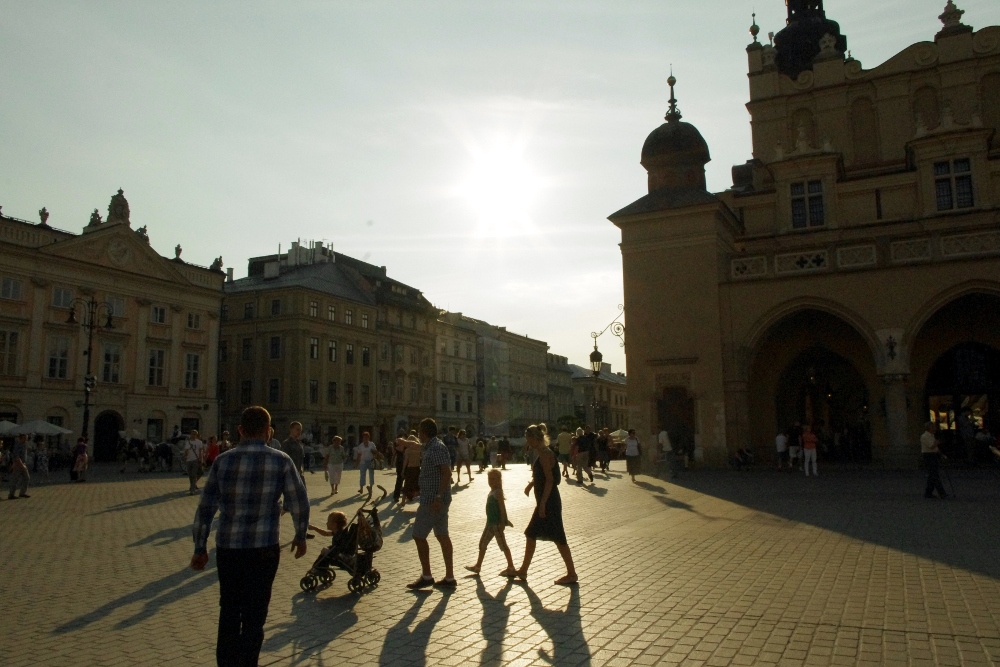
   I adore Krakow and am so glad I have family there. Krakow has oodles of charm and character, and I could just spend time wandering down it's pretty streets.


   For the weary there are horse-drawn carriages, driven by chic ladies:


   What I love in Krakow is how the city lives. Everyone seems to be spending
There are people sitting up on top of the huge statues, and kids splash around in the fountains. (In southern Germany the statues and fountains are fenced, pfff spoilsports). Cafés, town squares and parks are filled with people, and no, it's not just tourists.

A fortune teller in a nook of the Cloth Hall:


   Not quite sure what these guys were up to. one of them even wore an anonymous cloak!


   Krakow is chock-full of churches. Most of them are beautifully Gothic, but full of baroque kitsch. Can't remember which one this is any more, but I totally love the blue ceiling:


   Oh, and dragons. There are dragon-themed playground and water park, and dragons on top of everything. You'd like it here, Khaleesi. Here are the original dragon bones hanging at the Wawel hill Cathedral:


   I climbed up the hill to the Wawel Castle even though it was very very hot. There were sprinklers everywhere, even in the royal courtyard, and all the visitors were happily getting soaked. 
    I always visit the royal cathedral. It thrills me to see all the tombs of the kings and queens in one place.

Then up the bell tower to make a wish on Sigismund's bell, before going down the hill through the dragon's cave.

   My favourite part of Krakow is the Kazimierz area. It used to be the Jewish district, and now it's full of everything alternative, hipster and artistic. Everything is a little dilapidated, and chock-full of charm.


   This cafe was called Singer, and totally went with the theme:


   I must totally mention Krakow's cafes. Nowhere else have I see so many amazing cafes, each one more atmospheric, whimsical and delightful than the other. Some of my favourites were (communism-nostalgic) Propaganda, magical Camelot, the kid-friendly yet stylish Rodzinka Cafe, and Cafe Philo.


   It was in Krakow that I met Anwen, my hair care guru. We have talked online and sent each other cosmetics, and this was the first time we met in real life. She is totally charming, the owner of the most stunning pair of blue eyes I have ever seen, and yes, her hair really is that beautiful. She showed me the best ice-cream in Krakow (or in the world? anyway, the wild-strawberry one still haunts me) (if you want to find the place go to Starowislna street and walk till you see the huge queue). We spent a lovely evening discussing blogging, bra fitting and hair care over drinks in the charming Kazimierz district.


    Compared to Krakow, Warsaw is fast-paced, spiffy and big. It reminded me a bit of Munich: everything seems larger than necessary, from sky-scrapers to monuments. The only cosy thing about Warsaw is the Old Town:


   Unlike Krakow, Warsaw's Old town has all been rebuilt after the war, since it had been bombed to bits.

  I spotted this amazing little restaurant off the Barbakan. Everything is drawn on!

Kluska Polska, Krzywe Kolo 30

       I was in the new Chopin museum, which is totally amazing because it lets you submerge yourself into the music, as his pieces are quietly playing in every nook and corner.


   I love the fact that although you have plenty of supermarkets and chain-stores,  small private-owned businesses seem to thrive as well. In Germany most private stores are pretty expensive, whereas in Poland there are plenty of normally-priced ones. 
 
 
     Here is a small vegetable store in Krakow:


   I found several nice drugstores, and of course I brought back some cosmetics from Poland, mostly based on Anwen's and Alina's reviews. Here are my spoils: two henna-based hair dyes, two leave-in conditioners, two toners, an amber scalp treatment, a hair and nails supplement, a concealer, and the famous Kallos Latte:


     As you can see I also got some rough amber (ca 10€ from a street dealer), handmade glass earrings, Wysokie Obcasy (an intelligent feminist-ish women's magazine that I love, why isn't there anything like that in Germany?), dragons and caramel sweets. Oh and also Oscypki cheeses (not shown because we had already eaten them) and bras. I also got books as well as amazing vintage clothes from my grandma, and I barely managed to carry my luggage home. This didn't stop me from buying another two cups from the Sukiennice (cloth Halls). I'm obsessed with these hand-painted cups, and bring a few every time I am in Poland. They cost something like 8€ per cup, which is really cheap compared to prices of handmade stuff in Germany:


And of course I paid a visit to this place:


   And I found some great bras that were surprisingly not Ewa Michalak! Stay tuned for reviews.


   Have you ever been to Poland? Or maybe you would like to? Also, what kind of ridiculously fragile / heavy things have you brought back from travels?


Trap The Moisture! Occlusive Ingredients In Skin And Hair Products


      "Oils don't moisturise." -- so how come oils and butters are so great for dry skin and hair? Oils are occlusives, and occlusives slow down the evaporation of water from the skin or hair. Basically, they seal in the moisture.
    Oils are not the only kind of occlusive out there. In fact, most occlusives are man made: silicones, mineral oil, cetyl alcohol. Occlusives are very important components of most cosmetics, so if you want to know your product you need to know your occlusives.

    The "richer" the product is, the more occlusives it contains. Ointments have the most, followed by creams. Lotions, milks and gels contain much less occlusives. Hair masques contain a lot of occlusives, conditioners less, while styling products usually contain lighter ones in smaller doses.

How do occlusives work ?

   They create a film over the skin and hair. This seals in the moisture, but may also seal out the moisture. Occlusives might block pores -- silicones, cetearyl alcohol, lanolin and certain oils often do this. Do remember that clogged pores can be very individual -- what might not clog your pores might clog mine, and vice versa.

   It is handy to recognise the most common occlusives. That way when you take a product into your hand, you can estimate how "heavy" or moisturising it will be. Also, even the best moisturising ingredients won't give great effects if not mixed with an occlusive (think of licking chapped lips -- they simply dry out even more).

Here is a list of occlusives, from dermatology.about.com :


Which occlusives are the best?

   Mineral oil feels non-greasy and so it´s used very often, but it isn´t very good in sealing the moisture in. Silicones feel silky and non-greasy, but they might block pores or cause build up. I advise avoiding them in skin care products, they may be used in hair care with caution. Lanolin is thick and tends to block pores, but it´s amazing for lips, heels and elbows.
   Plant-based occlusives (oils and butters) are the best kind of occlusives since they are biodegradable, and don't pose health risks. Remember however that every different oil has different properties -- some are more likely to block pores than others, and some are less greasy than others. Obviously different oils are good for different products -- if you are looking for a rich, moisturising product for dry skin, sesame oil or shea butter is a good ingredient -- but these same ingredients won't work for you if you need a light product.
    Your hair type determine the kind of occlusives you need in your products. Porous hair loves oil, and dry hair definitely needs oil. Finer hair needs very low amounts of light oil (like jojoba). If you feel your hair is weighed down, chances are there is too much occlusives in your products. You can always add extra oils into your products if your hair needs to be weighed down a bit.
    It usually takes a bit of trial-and-error to find which occlusives your hair and skin loves. I have written quite a bit on this blog about many occlusives, so have fun browsing through the archives.

sources:
dermatology.about.com


Tips For Looking Great At The Beach


     Tips gleaned from from years of peeking at women behind my dark glasses and an oversized hat:

* Let's talk optical illusion: swimwear can be difficult to wear because there is not much the eye can rest on (so it focuses on the bare expanse of skin). Patterned fabric or ruffles / other details distract the eye wonderfully. Also try jewellery: an anklet, bracelet and earrings can do wonders, as can hair accessories. A hat or sunnies always work.

* Invest in a pretty towel. I have seen girls wrapping themselves in a over-used beige faded thing post-swim, and it doesn't look good. I suggest a light-weight towels (maybe microfiber) in a nice colour, and you can't go wrong with nautical stripes. I also love Hammam towels, they are cute, lightweight and can be used as just about anything.

* The cover up: on a beach where almost everyone is wearing their smallest swimwear, a cute cover-up can look intriguing. The classic is a light dress, perhaps something that is too short / too see-through / too deep-necked to wear in normal life. You can also try a long skirt, or denim shorts or a light billowy top.

* Get a swimsuit in your bra size. Trust me, you'll never go back if you do-- the lift, shape and comfort are incomparable. Ideally the band size should be close to your underbust measurement in inches. Don't forget to go adjust your cup size accordingly, because cup sizes are relative to the band size. Here is a guide on finding the right size.

* Go gentle on the makeup. Too much makeup on the beach looks desperate. Foundation is usually too much (unless it's a very light layer of mineral foundation), so does eye-shadow, eyeliner  and too much mascara. Use concealer in the places that really need it, a light touch of bronzer and lip gloss. Blush and mascara look good if you apply with a very light hand. Eye-shadow only looks good if it is a fun, bright colour swiped on the eyelid, anything more elaborate looks like trying too much. An exception with the makeup is if you are intentionally going for the whole look: like that girl I saw once in  retro swimsuit with winged eyeliner and red lipstick.

* Hair is very important. If yours just doesn't look good wet, try an interesting up-do. There is nothing prettier than a braid by the poolside. A bun looks great both wet and dry.

* Exfoliate and moisturise. This makes the skin look healthier. A layer of self-tanner is definitely allowed (here is my favourite one).

* Whatever you wear, own it. Don't give it a second thought, act as if it were your skin. Bad hair, smeared eyeliner, lobster tan -- rock it.

* Attitude is the most important thing. The woman with bad hair, cellulite and blemishes who looks like she's having fun, who laughs and runs straight into the water will always be sexier than the perfectly dressed one with the toned body who is tugging at her swimsuit and worrying about her makeup. The beach isn't a runway, it's place to enjoy yourself.


   What are the things that make you feel great at the beach? Do share in the comments.


Secrets Of The Perfect Skin


    Garance Dore mentioned that Constance Jablonski's perfect skin has the perfect skin. I often see women wanting to know what she uses (they usually mention something really ordinary like Pond's cream). I was interested in her lifestyle: what does she eat? How does she exercise? Sure enough, she has been eating really healthy since she is a kid and it's still a top priority for her. It's not the first time that I have seen this connection: great lifestyle = great skin.
    In real life, the people with the best skin that I know were those who regularly do Yoga (fresh, energized skin even if the owner is in their 60s), and raw foodists (skin so clean it was almost translucent). (Of course there are freaks that have immaculate skin even though they never cleanse it and live on french fries, but then again I know someone who never ever brushes his teeth and has never had a cavity -- but these are lucky anomalies).

   So which are the factors that really influence how your skin looks like? Here are the most important ones:

Genes:

   Sure genes are important -- but not that important. Obviously we do inherit skin and hair from our parents, but newest research has shown that environment and lifestyle can switch genes on and off -- in other words genes are possibilities, and you inherit all the different possibilities of your many ancestors . Your body determines which of them will be used.
    Besides, I wonder how many habits that have been passed from parents to kids get swept under the carpet of "it's in my genes". Our early years influence our tastes and habits much more than most people realise.

Food:

     This is one of the most important (and yet overlooked) aspects of having great skin. Skin is a mirror of what goes on inside the body. And a lot of what we put in is difficult for the body to deal with.
   I always know I have eaten too much chocolate because of breakouts on my forehead. Lactose intolerance (which is actually more common than people think) is often closely linked with acne. A friend of mine who had really bad neurodermitis on her hands decided to stop eating gluten and now her skin I almost clear again. Our skin is the mirror of our digestive system, and the way our body sends out distress signals.
     Basically, the things that are difficult for our body to deal with are: processed foods, refined sugar, lactose, and gluten. Add to that artificial food additives, hormones on meat (in the US and other countries that allows them), too much salt, as well as soy and peanuts added to almost every processed food out there. The body is not made to cope with all of that, and sooner or later it starts breaking down -- usually after the "invincible twenties" are over, or when a time of emotional stress comes up, or after an illness or having a baby.
   Remember, food is just a habit, habits can be changed.

Cosmetics:

      These are very overrated in the beauty industry. Sure, they can help a lot with the skin --- and it is easier to change your beauty regime than your eating and lifestyle habits. However even the best skin-care regime won't help if you eat junk and lead an unhealthy lifestyle. This blog is chock-full of great skin and hair care advice, but you'll notice that I write about eating healthy as well.

Lifestyle:

     Movement, being outdoors in fresh air and less stress -- all of this is very important if you want healthy skin and hair. Sports get your blood flowing and decrease stress levels. I also noticed that people who do Yoga regularly usually have a beautiful skin and a kind of vitality about them, even when they are older. Sleep is also very important for your skin. Stress takes its toll the skin and hair, and gives you an air of tiredness. Now I know that "avoid stress" is the least useful bit of advice that exist, as life isn't that easy. However it is really important that people find tools that help them deal with stress, and even more importantly: react with less stress to difficult situations. This could be running, yoga, EFT, journaling, meditating, autogenic training, painting, Aikido or whatever else rocks your boat.  If you don't have a de-stressing method yet (and no, TV, the Internet and eating don't actually relieve stress), try to find out which activities make you feel better at the end than you felt at the beginning. Also, try Yoga. Seriously, although life throws challenges at us all the time, it is ultimately up to us with which inner attitude we meet them.


    And of course eating healthy and leading a healthy lifestyle will make you feel good in your skin, which in turn will make you feel beautiful. And people who feel beautiful and like themselves are beautiful -- they radiate charisma.


   Over to you: what do you think makes people beautiful? What makes you feel your best?


Bras To center Breast Tissue + What To Look For When Buying A Bra


   Hey everyone, I'm back from Poland and very jet-lagged (can you call it jet-lag if you haven't been flying?) but as I can't sleep I decided to write this post instead. (Yes, I brought bras back home and there will be reviews). Also, sorry for not being able to publish many of your comments (that the commenting program wanted me to moderate) -- I couldn't get it to work on my phone. 
   This mail popped into my inbox with a couple of interesting questions:


   Thanks for sharing with us your bra fitting tips and experiences on your blog!  I find your info really useful since most of the info on the internet is about what does a bad bra fitting looks like and the signs of it but never really the causes. I can never figure out why in some bras the cups feel tight even though I don't have the classic signs of a bad fitting bra and am technically in the right size.  Thanks to your blog, I find out I need medium to broad underwires. The other bras I felt tight in had narrower underwires.  

I have some bra fitting questions that I hope you can answer:

1. I live in the U.S and most of the brands you recommended on your blog are only available online.  I think we have Gossard & Elle Macpherson in Nordstrom stores. Are there other good affordable U.S brands that I can find in U.S stores? I have never tried to return/exchange clothing online since I see that as wasting money in shipping it back and forth.  Also, I don't know if it's just that I haven't been to a lot of lingerie stores in my area but most of the bras are for breasts full on top, which wouldn't fit me properly because of my breast shape.

2. Can a right size & style bra help the breast tissue migrate more towards the center if I don't have a bad case of breast tissue migration?  I think I'm pretty fortune in that I don't have big breasts all my life and wearing the wrong bra size thus I don't have the my breast tissue under my armpits and in back rolls.  My breast tissue has always been closer to the sides (my arms) than the center of my chest where I want them to be.

3. What kind of bras should I wear to better center my breast tissue?  Most demi & balconet bras have shorter wires I think and those with longer underwires have fuller cups that I can't fill out at the sides since I have shallow breasts.  I think a plunge bra would be more appropriate but I remembered you mentioned that they're not really comfortable for daily wear. 

4. What are the signs of a good bra design? What should we look for when purchasing a bra?  I know molded & contour cups aren't good for your breasts since they will mold your breast to the shape of the cup.  Can you further define what a soft cup bra is?  
  
Some background info to help you better answer my questions & understand my situation:

   I have an average size, I guess I'm lucky in that I can find my size easily in stores. I have shallow wide set breasts with medium to broad width (I think), my breasts are closer to the sides than the center.  My breast shape is more tear drop, resembling the shape on the far right in your shallow breast blog diagram. I'm also petite (I'm 5'2") with wide shoulders and overweight. I guess since I have kind of an athletic build, not much fat goes to my chest area even though I'm overweight, instead they're pretty well distributed all over my body.     

   I went for a bra fitting at Nordstrom around a year ago and they fit me in a 36B Chantelle C Chic 3 Part Cup bra.  However, in most other brands I usually wear a 34C depending on how stretchy the band is. Victoria's secret measure me at a 34B and my sister in a 34B as well even though in clothing we're at least one size apart!  I can't find my measuring tape at the moment but I think my under-bust measurement is around 34-35.


Hello J
     I'm so glad my blog helped you figure out your underwire width! Here are my suggestions regarding your questions: Also, thank you for writing them out clearly and logically :)

Offline stores in the US + shopping online frugally

    Here is a list of recommended brick-and-mortar stores. I think the best US brand at the moment is Parfait Affinitas, they have a couple of offline stores.
    Although shipping costs extra, online stores usually have a much bigger range of sizes, brands and models than offline stores, so don't completely dismiss online shopping. Also, you might find pretty low prices during sales and special promotions. Some online stores might offer free shipping (sometimes only for a limited time as a special offer). I recommend buying a bigger amount of bras online (10 or more) and returning most of them, this is much more frugal than shipping two pairs back and forth.

Centering wide-spaced breasts

   From personal experience I'd say that breasts can get a bit closer together from wearing well-fitting bras. I never used to have cleavage, just a flat space between my breasts, now I do have a "valley". My breasts are still wide-spaced, but not extremely so.
   Plunges can be comfortable, it's only those cleavage-enhancing styles like Panache Inferno that are not recommended for everyday wear. And many plunges that work with shallow breasts (what do you shallow-breasted ladies recommend?) Do check out my review of the Braologie Posture Contour bra and vest, it is what I recommend to everyone who wants to center their breasts and / or deal with migration.

What to look for when buying a bra

  Soft cups are cups that are not padded / molded. They can be made of one layer of fabric or lined. They work together with the breast shape instead of being a firm mold to which the breast tissue has to adapt. I recommend soft cups for everyday wear, and moulded and padded bras only under outfits that need them.
   I highly recommend underwires and not wire-free bras. Also, a one-piece band is usually superior to a three-piece band.
   The fabrics should feel nice to the touch and not scratch. The underwires should not be terribly bendy *cough* Triumph *cough*, although this is not such a big concern in smaller cup sizes. Do try pulling on the band to see how much it stretches; if you feel it is extra stretchy you might want to size down (don't forget to simultaneously size up in the cup).
   Finally, the material and elastic should be solid enough to last and not stretch out too soon. Maybe trained seamstresses can tell how long a bra will last by looking at it, I usually rely on online reviews.

A word on Victoria's Secret

   It sounds from your measurements that you should wear 34 bands. However I wouldn't trust VS fitters. A while back several bra bloggers went undercover and got a fitted at different Victoria's Secret stores, and you can admire the results here,  here, here. Here is an analysis of why their methods don't work. You need to get your measuring tape out and see what the calculator has to say. Try on several cup sizes in a store, and don't forget to scoop and swoop!


    Any tips and advice for J? Did your breasts get more centered from wearing well-fitting bras? What do you look for when buying a bra?


A Short Guide To Fabrics -- How to Buy Comfortable And Durable Clothes


  Whether you are thrifting or shopping in a regular store, choosing the right fabrics will ensure that you look more polished, that your clothes will last longer and that you will stay appropriately warm or cool.
   Knowing your fabrics can especially help when navigating cheaper clothing stores -- the label can tell you whether the item will fall apart after two wears or still look as amazing after years. The same goes for online shopping. The tips below have been gleaned by me from years of checking labels on my clothes and comparing items on comfort and durability. I encourage you to take a look at the labels of the stuff hanging in your wardrobe and then fingering the fabrics to get a feel for them -- you will probably find that you tend to like certain fabrics and not others.

   I'll cover a couple of fabrics that I know well and seek out (or avoid).

Knitwear (Wool, Polyester, Cashmere and co.) :

    When shopping for sweaters, cardigans and co., I always avoid pure polyester/acrylic. It looks and feels cheap, it looks even worse after a few washes and it doesn't keep you warm at all. Cotton knitwear tends to look dull and isn't very soft, whereas pure sheep's wool can be very scratchy. I always look for cashmere, angora and lambswool when I buy sweaters. If you pass your hand along the sweater rack in a thrift shop, these yarns will jump out at you: they feel soft, fluffy and luxurious to the touch. They also look good (and keep on looking good with time) and are very pleasant to wear. Blends containing these yarns are also ok, sometimes even just 10% angora can transform a cotton or polyester sweater into something lovely.
    I also love alpaca and pashmina, which I picked up really cheaply on my travels. Don't ever be tempted to buy shahtoosh (if you have that kind of money to blow), since the poor little deer are killed for their wool.

Cotton, knitted and woven:

     The most important thing about cotton is understanding knits and wovens and their pros and cons. In short, a woven is a fabric where the threads go from up to down and from left to right, this kind of fabric is stable and doesn't loose it's shape. The best is when a woven cotton fabric has a touch of lycra in it. I like wovens because they look good even after years of wear, and because they skim the figure instead of clinging to it.
   If you examine a knit fabric, you will see that the threads form loops, it looks like a miniature version of knitting. Knits are very stretchy, and often cling to the body in an unflattering way. I avoid knits if they are very thin (like a lot of the tops in HandM) because they look like a rag after a few washes. Actually they look cheap even when brand new. Heavier (thicker) knits can be more durable as well as flattering, especially if they are not figure-hugging.
    I almost always prefer cotton over synthetics when it comes to blouses and shirts, especially for the summer. You probably also know that cotton underpants are healthier than synthetics, because of the ventilation thing.

Linen and linen blends:

    While I love the rough aesthetic and the coolness of linen, I never buy anything that is 100% linen because it creases like mad. After a few hours of wear the item looks like something a cow chewed. However, linen combined with spandex, rayon or even cotton can really cut down on the creasing while retaining the aesthetics.

Denim:

       I always go for denim with lycra (spandex) in it, because if it's not stretchy it's not comfortable. However this is a personal preference -- I sit cross-legged a lot of the time. I also never buy new sand-blasted denim because it is unethical.

Polyester:

     I avoid pure polyester most of the time because it looks cheap and feels awful. However, it can have it's place in a blend. When mixed with rayon, wool, viscose or spandex; polyester can look and feel nice. Sometimes I do find great pieces in polyester though, so I haven't crossed this fabric completely off my list yet.

Viscose / Rayon:

   This is probably my favourite fabric. It's a combination of natural and synthetic fibres, it can breathe like cotton, but has a slight sheen to it and drapes wonderfully. It also feels a little heavier than it looks and doesn't cling to the body.

Chiffon / Georgette:

   Chiffon is a name of a weave, it is usually made of many different fabrics, the most common being polyester. It is very light and floaty, usually sheer. I love chiffon in floaty skirts and dresses, as well as light scarves or light summery blouses.

Silk:

    Silk is beautiful and feels lovely on the skin, however it wrinkles a lot and ironing is my least favourite thing in the world, and moisture often leaves temporary stains on it. Plus, even though I thrift almost everything, I don't really feel comfortable buying silk because I can't help visualising thousands of cocooned silkworms being boiled alive.


    Obviously there is also the question of which fabrics are more green and sustainable. I don't concern myself with this so much because I almost always buy second-hand, and buying second-hand is the greenest option there is. Almost all the items that haven't been gifted to me come either from thrift shops, online second-hand stores or clothing swaps. However if you prefer to buy new, I strongly recommend researching the topic -- and remember that it's not just about the fabric but about the conditions the workers work in, the dyes used and what the company does with unsold clothes. Finally, don't forget that when it comes to being green, buying pieces that will last a long time (I'm talking both about durability and timelessness here) is always a better choice.


   So, any awesome fabrics that I have let out? Let me know! What is your personal favourite fabric?


How To Have A Bon Voyage -- By The Glamorous Grad Student


    Today I present a guest post by A -- "a grad student by day, fashionista by night", who used to blog at The Glamorous Grad Student. This post was originally published on my (now defunct) Xanga.


How to have a bon voyage


    Recently I was completing a little project for my apartment, a decorated map board with pins to represent my travels. It was fun reflecting on where I'd been, but also eye-opening to realize how many places there are still to go. Reflecting on my traveling experiences, I had some epiphanies about what makes for a successful voyage...

A country is not defined by its major cities

   I've been to a few European capitals, but looking at the map makes you realize how much more there is to a country than its major cities. You obviously can't visit every village, hamlet and cow-shed, but do try to see some of the countryside. In Switzerland I had the fun of a train journey from Zurich down through the Alps, and it was an amazing experience.

During the day, get lost on public transport

   In Vienna I hopped on a tram line and followed it for a while, then got out and followed it back. I spent the afternoon in a random pretty park that I don't think was even on the map. I'd never have found it without getting a little lost. On the other hand, getting the wrong bus in Rome at night was not so fun. The lesson? Feel free to get a little lost in daylight. Know exactly how you're getting home after dark.

You can go back again

   I used to feel a strange and strangling pressure when I traveled to see and do and go. So much time and money goes into planning travels and I for one sometimes feel like I must make all that worthwhile by seeing everything. Yet the best memories rarely come from the biggest attractions. You need to allow yourself the freedom and flexibility to wander and that will not happen if you have the mental attitude that this is your last day in Paris... ever!!!! That, my friends, is a recipe for stress.

Pack light, but pack well

   Can I stress enough the importance of packing? Obviously, over packing is a pain as you've got a big suitcase or two or three to lug around and that's never fun. But packing the wrong things is equally bad. And I don't just mean forgetting to pack a raincoat when you come to Ireland. In fact, that sort of mistake is easily remedied. My biggest packing nightmare was the time when I packed a heap of neutral basics with no personality and didn't feel like myself all week. So pack clothes you'll feel fantastic in, just not too many of them!


Now over to you! What are your tips for enjoyable travels?


Smart And Not-So-Smart Ways To Keep Cool This Summer


  • ... bonus points for sex appeal if you wear white.
  • Drink a lot of H2O 
  • ... preferably fruits. You can also wear them.


   So, how do you keep your cool in the summer ? 


Photo by pollygoh2002


Milk Thistle Supplement Increases Breast Size


   One of the side effects of the two weeks of fasting that I did was... my breasts grew. Just a little. Initially they started feeling tender, just like when they grew during pregnancy. Then, I noticed that they definitely got fuller. I was pretty puzzled because I had not been expecting this!
   I decided to research links to breast growth between the herbs and juices that I took during this time, and I found out that it is the milk thistle supplement that caused the growth.
  I suspect that the effect of the Milk Thistle was increased by the tea I drank, which contained fenugreek, fennel and anise, which raise oestrogen levels in the body and may stimulate breast growth.
   I took one tablet a day, and drank several cups of the tea for two weeks. I didn't gain a cup size, but bras that fit exactly in the cup got now a tad small, and I filled out cups where I had a bit of empty space. So I'd say I gained a half cup size. The breasts look fuller and rounder (they used to be more bottom-heavy); it was not a dramatic change and nobody else noticed it apart for me. I decided to take milk thistle for two more weeks, to see whether it is really it and not something else that was causing the boobs to grow. At the end of these additional two weeks my 28DDs didn't fit any more and I had to order some 28Es (that's right, review fodder).

  I took the Hepatos Mariendisteldragees from the brand Hevert, as they were recommended in the book I used for fasting. Specs for the curious: contain (26-45:1) 123,0-208,3 mg of dry milk thistle extract, which means 83,3 mg Silymarin (a standardised extract of the seeds). They are not the cheapest, but they don't have the side effect of nausea that many other brands can have on some people. Also recommended is the Legalon Mariendistel from Madaus. If these are not available where you live, you might want to ask the advice at your drugstore.
   Milk thistle is actually used to detox the liver. Contraindications include pregnancy, nursing or being younger than 12.

   Milk thistle is not the only herb that can boost breast growth. Many herbs can influence hormones and mimic puberty / pregnancy. As with all supplements, do your research first and use your head; especially if you have a medical condition or hormone imbalance. I'd like to add that the effects (whether at all and how much your breasts will grow) will depend on the current hormone cocktail in your body.
 
   So... anyone else have any experience with herbs and breast size? Or unexpected boob growth?


A Peek At My Skin-Care Product Drawer


   If you see my cosmetic stash, you will notice that I don't own a lot of products. It drives me mad when I don't have an overview over my things -- it makes me ignore the stuff and not use it. Also, after the many uncluttering purges I have done lately, I realised that I don't want to own stuff that I don't and won't use.
    My bathroom is pretty small, and it is important for me to keep it looking tidy and pleasant to be in. This makes it easier for me to streamline my products.

   Here is a peek into my bathroom drawer:


    On the left are products for washing the hair (shampoo, conditioners and masques), on the right are cleansers, moisturisers, deodorant, aloe vera gel, a couple of oils, sunscreen, leg bronzer, razor, nail file. In the middle are his and hers dry brushes, and of course you can spot my microfibre cloths.


   The right part of the second drawer (the left half has contact lense stuff and my guy's stuff). You can see my self-tanner, a bunch of hair products (dry shampoo, scalp rub-in, mousse, moisturising spray) and the unfortunate sundepil. On the right are my clays and scrubs as well as hammam scrubbing mitts.
    The bottom drawer holds detergents for the bathroom. Other skin-care products that stay outside the drawers is my micellar solution (the bottle is too big and doesn't fit), a body butter, and my epilator. My make-up stuff is in the bedroom, and I'll show it to you another day. Oh, and the drawer near my bed holds my Skin Food, cuticle oil and Weleda rose oil, so that I can use them right before sleeping.

    I hate having duplicates, so I will buy most products (like conditioner) only when the old one runs out (unless I have a very good reason for owning several conditioners: for example one protein one and one light one and a heavy one). Probably the only think I keep a stash of is soap -- but then I display it in a pretty porcelain cup and it makes the bathroom smell nice. Everything else -- shampoo, razors, cosmetics, gets bought when the old one is running out. If by chance I have more than one product of a kind, the unused one goes at the back of the cupboard where it waits for its turn. I won't have three half-used shampoos standing on the counter.

    I also avoid "unitasker" cosmetics: I don't buy shaving gels, I use soap. I prefer soap to shower gels since they are more eco-friendly and take up less space. I don't buy creams for the hands, the feet, the cuticles... I actually use product for all of them (usually an Alverde oil, which is also my body moisturiser and my hair oil). For cases of extreme dryness I have the Weleda Skin Food which is also my undereye cream, my lip balm and I also use it on the kid's cheeks. The aloe-vera gel is a moisturiser as well as an anti-frizz product.

   The husband sometimes prefers to have his own stuff, but that doesn't take up much space. The kids use the same stuff as I do (my shampoo and conditioner to wash their hair, adult toothpaste). I'm not a huge fan of the typical too-sweet-glittery kid's products, and my kids don't see anything strange about using the same stuff as the rest of the family.

   I'm not a saint though -- I own several each of moisturising creams, clay masks and cleansers. However each one of them is very different from the other and in a way serves a different function (for example the cleansers are an micellar solution, an Aleppo soap and a traditional gel cleanser). Also, the essential oil collection that I and my husband share isn't very small.
   My coloured cosmetic stash is varied but not very big  -- as long as you don't count my stash of mineral makeup samples -- I can't figure out what to do with ones that don't fit work for me. Any ideas? When I find something that suits me (foundation, bronzer) I tend to stick to it and not try any different ones unless I read a really mind-blowing review of something. I promptly get rid of any product that doesn't work (if I don't find a good way to repurpose it).

   So what do I hoard? I'd say jewelry. I have lots of jewelry. Lots. However, the way I justify it is -- jewelry doesn't go old, and chances are a granddaughter will wear it some day.

   For me it's not about being spartan -- it's about having what I need. It's also about not losing stuff at the back of the drawers. I do need three kinds of cleansers because each one works differently. I don't however need a different moisturiser for every body part.
    The vanity unit is something I made of an Ikea commode, following these instructions. I stained it with boiled walnut shells + potash, and then made it waterproof with several layers of linseed oil (when it dries, it crystallizes and makes the wood pretty much waterproof).

   What does your cosmetic stash look like? Do you prefer to have a few chosen products? Or do you love to have a lovely big collection of products you can pick and choose from? Anybody ever tried to hack an Ikea piece?


Check these out: